Lebohang Kganye
Le Sale ka Kgotso
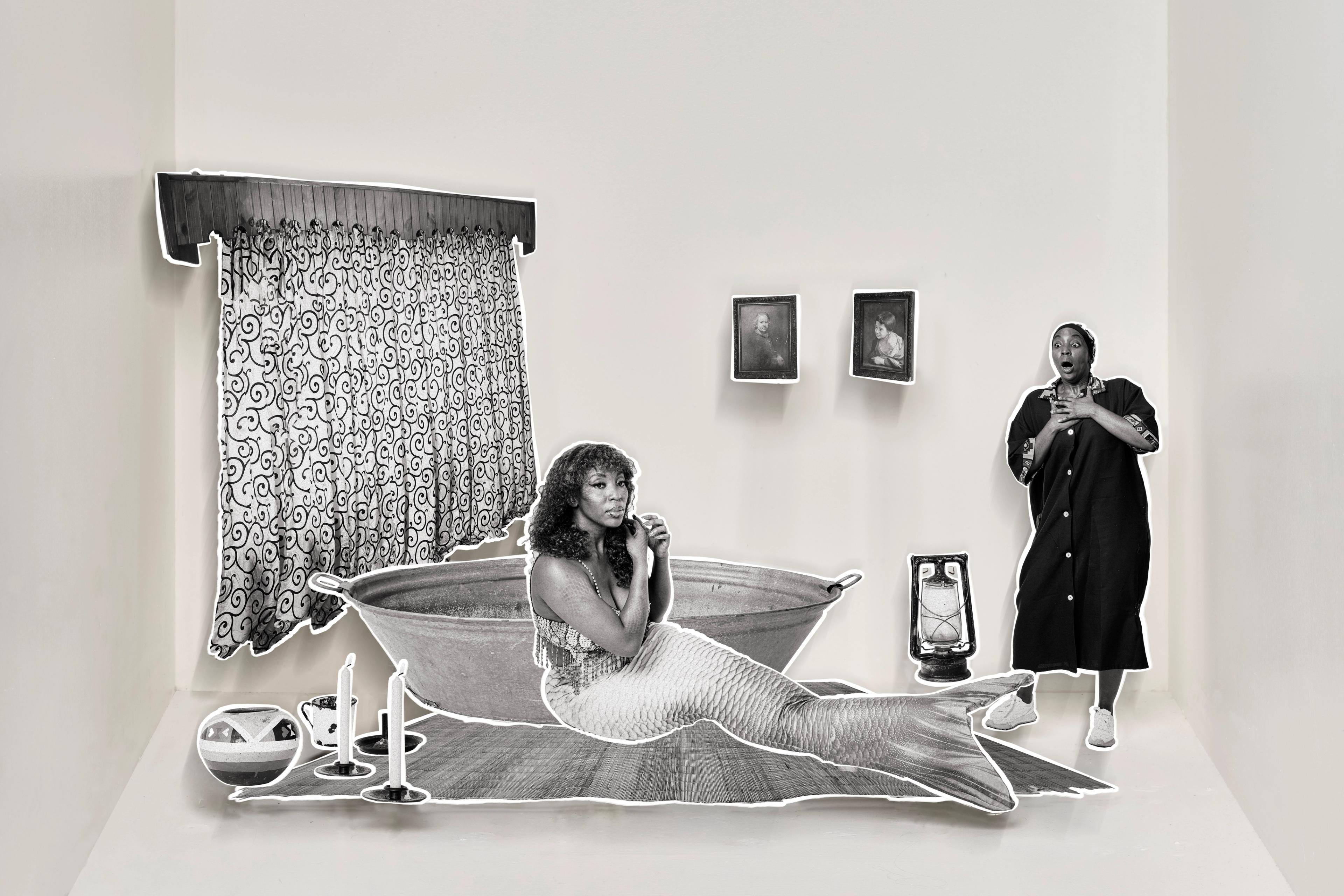
Le Sale ka Kgotso is a new scenographic installation uniquely conceived for the museum by South African artist Lebohang Kganye. Photography, sculpture, and scenography converge in large-scale spatial works that explore the concept of home as both a place of safety and a place of tension.
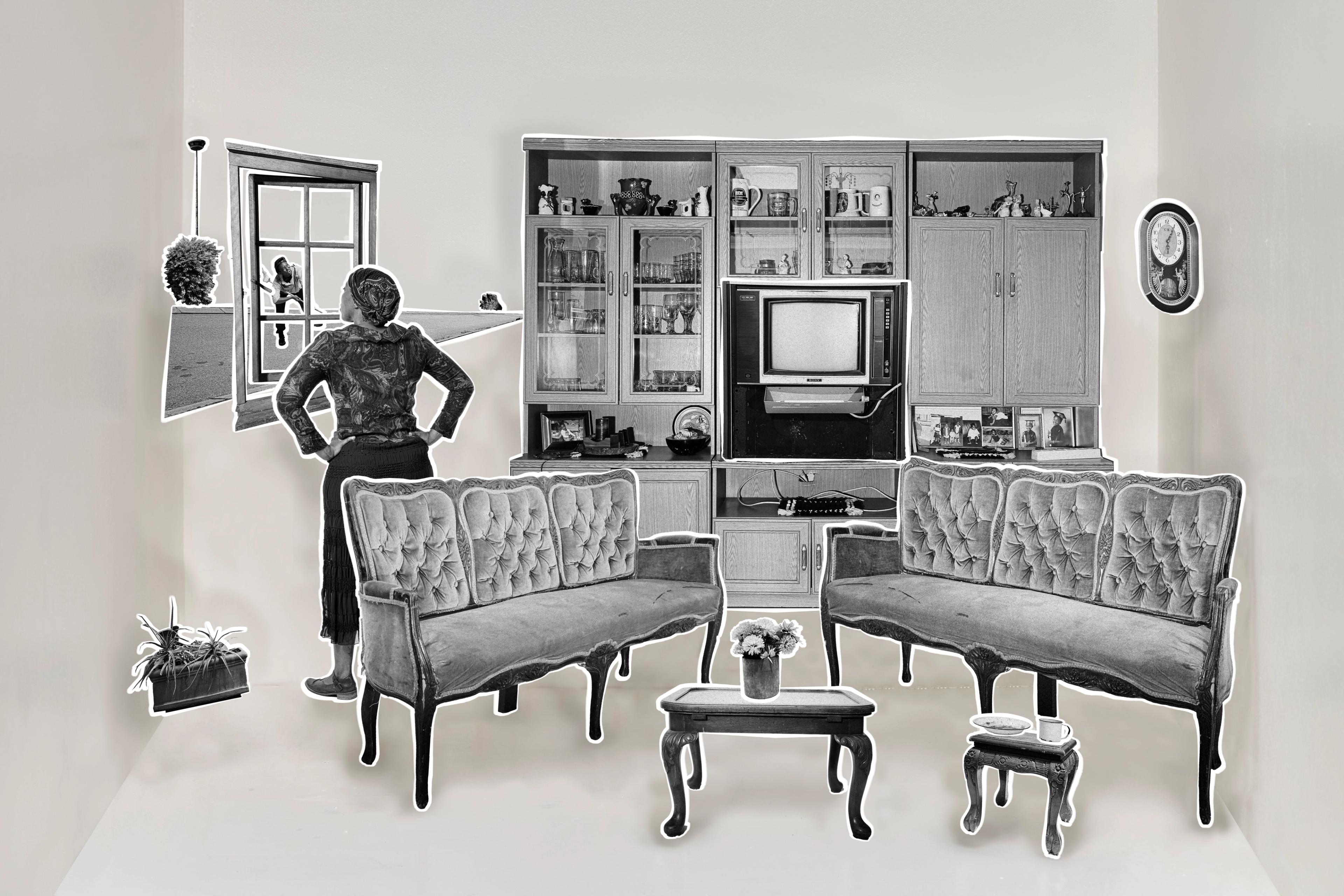
Entering the House of Memory and Myth
Lebohang Kganye (b. 1990) is a South African artist based in Johannesburg and one of the most talked-about image-makers of her generation. On March 6, she comes to Stockholm with Le Sale ka Kgotso, an exhibition created exclusively for Fotografiska. Visitors are invited to walk through full-scale structure modeled after a Reconstruction and Development Programme” (RDP) house, a South African socio-economic housing program implemented by the government of President Nelson Mandela post-apartheid in 1994. Moving through a series of interconnected rooms, visitors encounter layers of family memory, mythology, and collective storytelling. The exhibition explores the home as both a place of refuge and a site of unease, charged with history and identity.
The installation unfolds as a sequence of five staged scenes, each set in a different room of the house or on the street. These are not static tableaux, but deliberately theatrical constructions. Drawing on South African oral traditions, folklore, and intergenerational storytelling, Kganye’s narratives are less about the past and more about the persistence of belief systems, rituals, superstitions, and communal memories that continue to shape everyday life.
”What photography has always been about is evidence, a tool of evidence. But actually it is also the tool of imaginary, and also linking to memories and how the memory is not factual. A lot of imagination goes in to it” says Lebohang Kganye.
"Stories I have heard growing up in the township, many of them very bizarre"
”A large part of my practice is centered around oral history and storytelling but particularly also the generational transmission of stories. I brought in mythology and all of these stories I have heard growing up in the township, many of them very bizarre.”
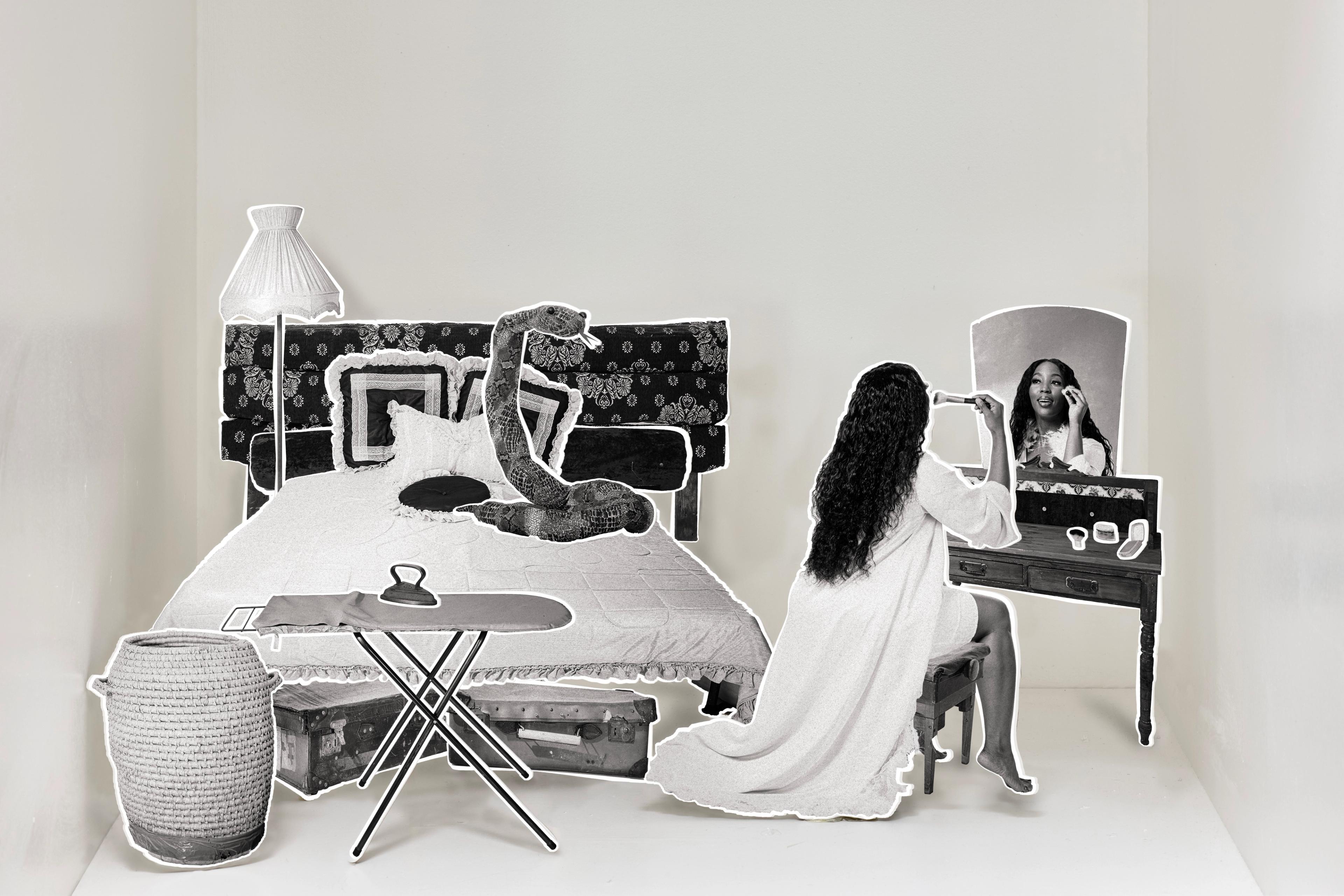
Le Sale ka Kgotso roughly translates as “stay in peace” in Sesotho, a farewell phrase spoken in South Africa when leaving someone’s home. However, the expression is ambiguous.
When pronounced as “Le sale le Kgotso,” it instead evokes not peace, but a tokoloshe: a mischievous and dangerous spirit from Xhosa and Zulu mythology, believed to cause illness, chaos, and spiritual disturbance. By highlighting how a slight mispronunciation can entirely alter the meaning of the phrase, Lebohang Kganye reflects on how words — much like family situations and histories — can carry double meanings.
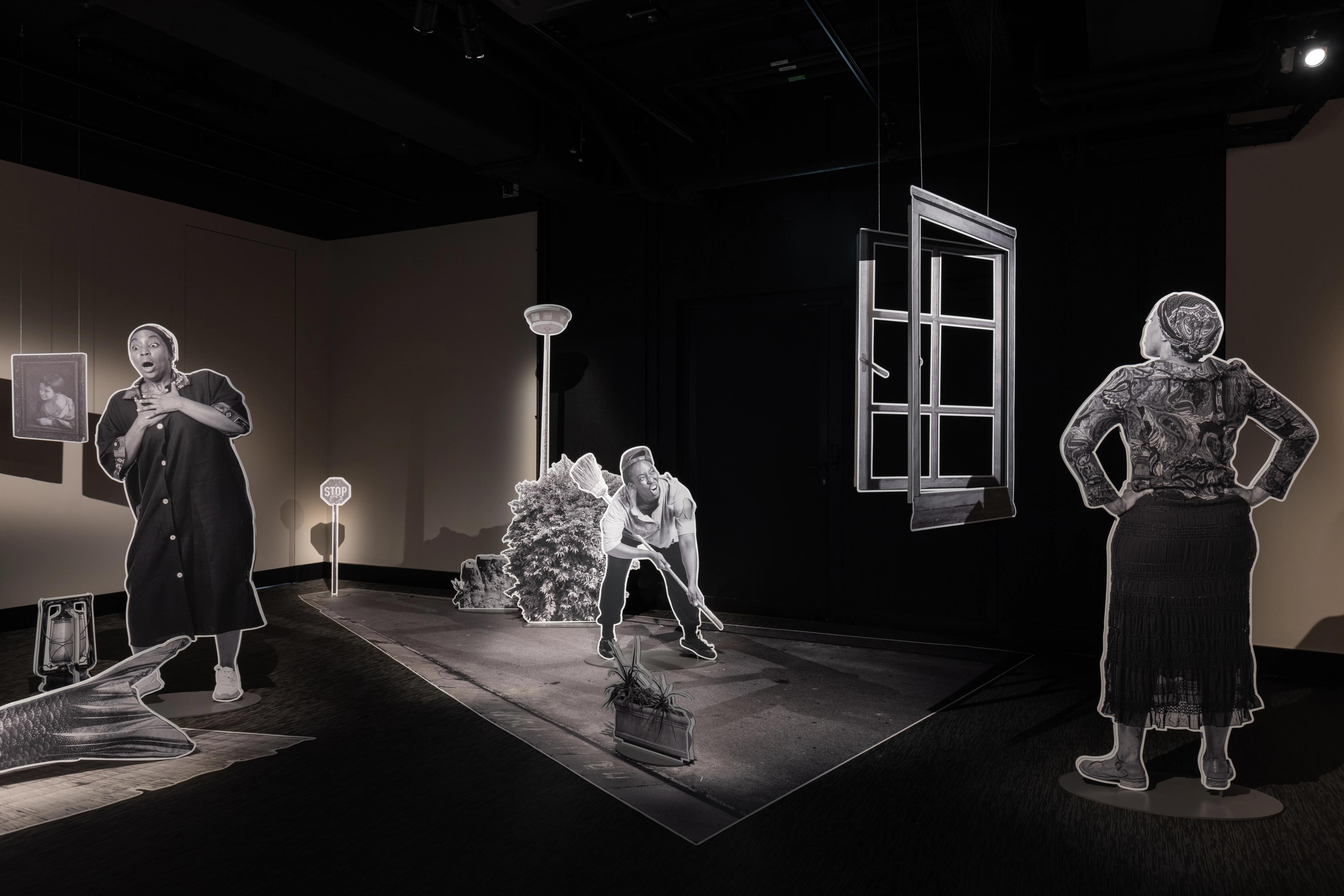
Working at the intersection of photography, sculpture, and installation, Kganye uses family archives and staged environments to explore how personal narratives shape and challenge broader histories. Her works are deeply rooted in historical material, yet never nostalgic. They speak to an ongoing present: political, dreamlike, and intimate at once.
Le Sale ka Kgotso is on view from March 6 through October 18, 2026. The exhibition is curated for Fotografiska Stockholm by exhibition producer Mohamed Mire and Global Director of Exhibitions Jessica Jarl.